


Oak Kitchen Cabinets: Comparing Rift Cut vs. Traditional Styles
The kitchen, often considered the heart of the home, deserves a design that reflects both style and functionality. In recent years, oak kitchen cabinets have experienced a resurgence in popularity, with homeowners drawn to their natural warmth, durability, and versatility. While traditional oak cabinets boast timeless appeal, the emergence of rift cut oak offers a modern twist. This blog post explores the unique characteristics of rift cut oak and traditional oak kitchen cabinets, helping you determine which style best suits your design vision, ultimately leading to a stunning and functional kitchen space. White oak kitchen cabinets, in particular, provide a blank canvas for personalization, allowing for a wide range of finishes and design elements.
Table of contents:
What Makes Rift Cut White Oak Kitchen Cabinets Unique in Modern Design
Benefits of Rift Cut Oak for Sleek, Minimalist Kitchen Aesthetics
How to Integrate Rift Cut Cabinets with Fluted Panels and Open Shelving
What Makes Rift Cut White Oak Kitchen Cabinets Unique in Modern Design
Rift cut oak is distinguished by its straight, consistent grain pattern, achieved through a specific cutting method that minimizes the presence of the medullary rays common in plain sawn oak. This results in a cleaner, more uniform appearance, making it ideal for contemporary designs that prioritize sleek lines and a minimalist aesthetic. Unlike traditional oak, which might showcase more character and variation in the grain, rift cut oak presents a refined and sophisticated look. This inherent characteristic allows rift cut oak to seamlessly blend into a variety of modern kitchen styles, from Scandinavian-inspired spaces to urban chic lofts.
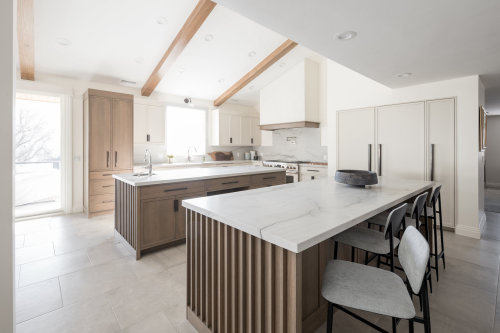
Benefits of Rift Cut Oak for Sleek, Minimalist Kitchen Aesthetics
The beauty of rift cut oak kitchen cabinets lies in its ability to create a sense of understated elegance. Its clean lines and consistent grain pattern contribute to a visually uncluttered space, essential for achieving a minimalist aesthetic. Furthermore, rift cut oak takes stains exceptionally well, allowing homeowners to explore a diverse range of colors and finishes, from light, airy hues to rich, dark tones. The absence of prominent grain variations also ensures a more uniform color application, further enhancing the cabinet's modern appeal. The clean lines lend themselves to integrations with modern hardware.
How to Integrate Rift Cut Cabinets with Fluted Panels and Open Shelving
Rift cut oak cabinets beautifully complement various design elements, including fluted panels and open shelving. Fluted panels, with their vertical grooves, add texture and visual interest without compromising the clean lines of the rift cut oak. Consider incorporating fluted panels on kitchen islands or cabinet doors for a touch of sophistication. Open shelving provides an opportunity to showcase decorative items, plants, or everyday kitchen essentials, adding personality to the space. When combined with rift cut oak, open shelving creates a balanced and airy feel, preventing the kitchen from feeling too enclosed or heavy. Sourcing from places like UnionLand Cabinetry (as seen with the open kitchen cabinet two-tone with white oak stain fluted panel island) can provide inspiration and quality examples of these design elements.
In conclusion, the choice between rift cut and traditional oak kitchen cabinets depends largely on your personal style and design preferences. While traditional oak offers a timeless charm with its natural grain variations, rift cut oak provides a modern, streamlined aesthetic that is perfect for contemporary kitchens. By understanding the unique characteristics of each style, you can make an informed decision that will transform your kitchen into a space that is both beautiful and functional. Consider how the principles of rift cut oak cabinetry might translate to other parts of your home, ensuring continuity of design throughout your home. Embrace the natural beauty of oak and create a kitchen that reflects your individual taste and lifestyle.

